
What Does Horse Insurance Cover?
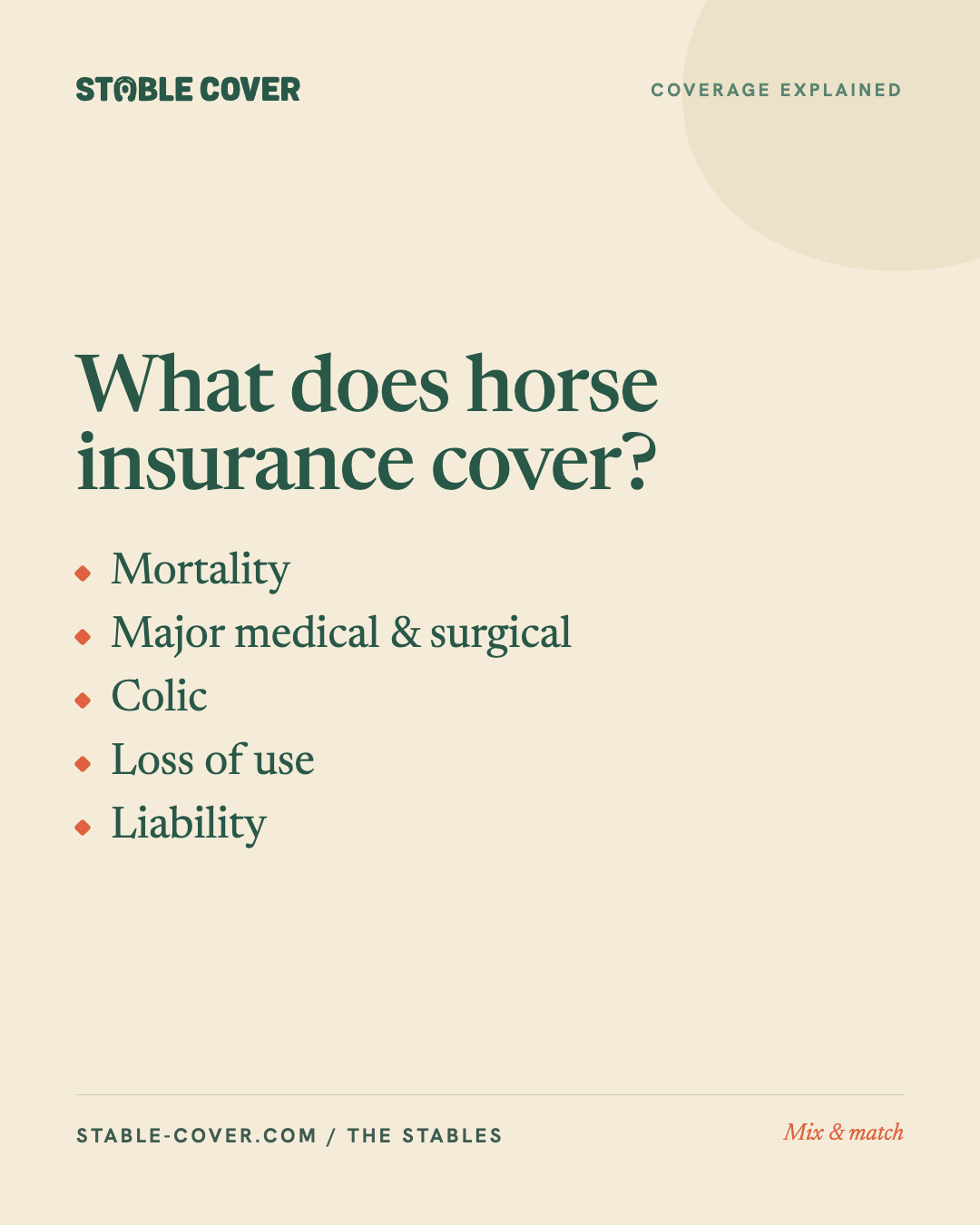
Horse insurance isn't one thing — it's a set of coverages you can combine to fit your horse and your budget. In plain English, we explain what each piece actually protects: mortality for your horse's value, major medical and surgical for vet bills, loss of use for working horses, and liability for you. We also cover the common exclusions, like pre-existing conditions and routine care, so you can build the right mix of protection instead of paying for every add-on.
"Horse insurance" sounds like one thing, but it's really a set of coverages you can mix and match to fit your horse and your budget. Once you know what each piece does, building the right policy gets a whole lot simpler. Here's the plain-English version — no jargon, just what each type of coverage actually protects.
The main types of horse insurance
Mortality coverage
This is the foundation most policies start with. Mortality coverage pays out your horse's insured value if they die from accident, injury, illness, or are humanely euthanized on veterinary advice. Think of it as protecting the investment you've made in your horse. It's usually priced as a percentage of your horse's value (often around 2.75%–4% a year).
Major medical and surgical coverage
This is the coverage that handles vet bills. Major medical helps reimburse eligible costs for treating illness and injury — diagnostics, medications, hospitalization, and more — while surgical coverage focuses on operations, including the big ones like colic surgery. This is where insurance does its heaviest lifting day to day, especially with veterinary costs rising around 10% a year.
Colic coverage
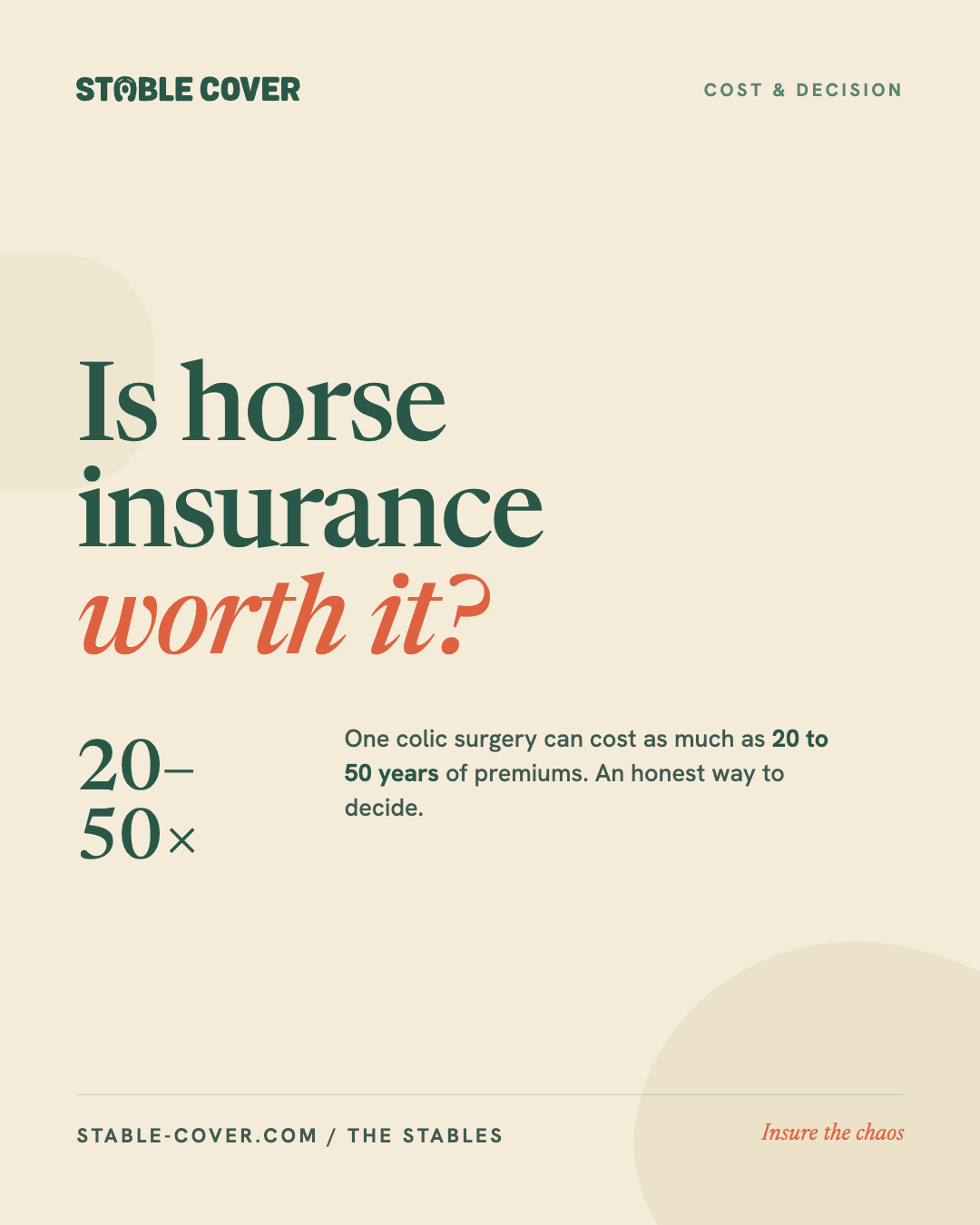
Because colic is both common and expensive (surgery often runs $7,000–$15,000), it deserves a special mention. Some plans include colic within surgical coverage; others offer it as a dedicated benefit. Either way, it's one of the most important things to check before you buy.
Loss of use coverage
If your horse has a job — competing, breeding, lessons — loss of use coverage helps if an injury or illness permanently ends their ability to do that job, even though they're still alive and well cared for. It's especially relevant for sport and performance horses.
Liability coverage
Horses are big animals, and accidents happen. Liability coverage protects you if your horse injures someone or damages property — for example, if they get loose or kick a visitor. It covers you, the owner, rather than the horse itself, and it's often surprisingly affordable.
How the pieces fit together
A simple way to think about it:
- Mortality protects your horse's value.
- Major medical and surgical protect against vet bills.
- Loss of use protects your horse's purpose.
- Liability protects you.
Most owners start with mortality, add major medical or surgical for real-world protection, and then layer on loss of use or liability if their situation calls for it. You don't need everything — you need what matches how you ride and what you couldn't easily pay for yourself.
What horse insurance usually doesn't cover
Being clear up front saves disappointment later. Across the industry, policies commonly exclude:
- Pre-existing conditions — anything your horse was already dealing with before coverage began. (This is the big reason to insure early.)
- Routine and preventive care — vaccinations, dental floats, farrier visits, and regular checkups are normal ownership costs, not insurable events.
- Elective procedures that aren't medically necessary.
Your exact coverage, limits, and exclusions are spelled out in your policy documents — always the best place to confirm the specifics.
What makes coverage actually useful
Two policies can list the same coverage types and still feel completely different at claim time. The details that matter:
- Freedom to use any vet. With Stable Cover, you can use any licensed U.S. vet — no networks, no restrictions.
- $0 deductible and 0% co-pay options, so more of your bill comes back to you.
- Fast claims — most are reimbursed within 48 hours of approval.
- Automatic renewals, so your coverage continues without an annual re-application.
Build the right mix for your horse
The best policy is the one shaped around your specific horse. Explore the individual coverages — major medical, mortality, colic and surgical, loss of use, and liability — or skip ahead and request a quote. We'll help you put together coverage that fits your horse and your budget, with real people who ride too.
Frequently Asked Questions
What does horse insurance cover?Depending on the plan, horse insurance can cover your horse's value if they die (mortality), eligible vet bills for illness and injury (major medical and surgical), the loss of your horse's ability to do their job (loss of use), and your liability if your horse injures someone or damages property.
What is major medical horse insurance?Major medical coverage helps reimburse eligible veterinary costs for treating illness and injury — things like diagnostics, medications, and hospitalization — usually up to an annual limit you choose.
What is equine mortality insurance?Equine mortality insurance pays out your horse's insured value if they die from a covered cause or are humanely euthanized on veterinary advice. It's often the base coverage that other protections are added to.
Does horse insurance cover routine vet care?Generally no. Routine and preventive care like vaccinations, dental work, and farrier visits are considered normal ownership costs and aren't typically covered. Insurance is designed for unexpected illness, injury, and emergencies.
What isn't covered by horse insurance?Common exclusions include pre-existing conditions, routine and preventive care, and elective procedures. Your specific exclusions are detailed in your policy documents.
Popular Posts

Strangles Awareness Week 2025

Understanding Pre-Existing Conditions

The Ultimate Guide to Equine Physical Therapy


.png)
The Stable Categories


Your horse's protection, tailored to complement your lifestyle effortlessly.