
How Much Does Horse Insurance Cost?
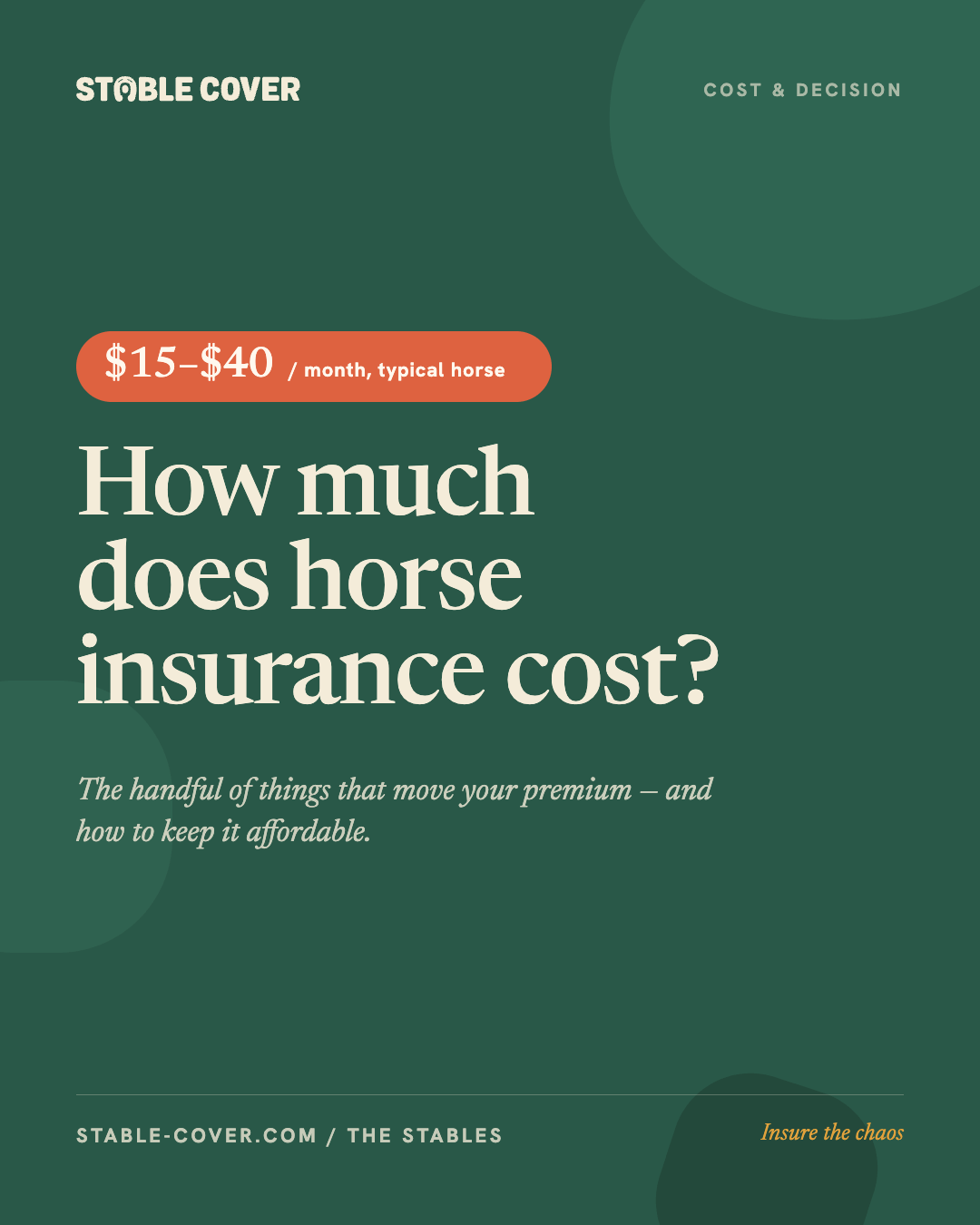
Wondering what you'll actually pay to insure your horse? We break down the handful of things that move the number — your horse's value, age, breed, discipline, coverage choices, deductible, and state — along with the typical price ranges most owners land in. You'll see why a single emergency can cost more than years of premiums, and pick up simple ways to keep coverage affordable without cutting the protection that matters. Run your own numbers in minutes.
If you've started shopping for horse insurance, you've probably noticed the answers are all over the place. That's because there's no single sticker price — your premium is built around your horse and the protection you actually want. The good news? Once you understand the handful of things that move the number, it gets a lot easier to know what's fair.
Here's the short version: most owners pay a percentage of their horse's value for mortality coverage, plus a flat annual amount for medical and surgical protection. We'll break down exactly what that looks like below — and show you how to keep it affordable.
The quick answer
For a typical pleasure or sport horse, here's the ballpark most owners land in:
- Mortality coverage usually runs about 2.75% to 4% of your horse's insured value per year. So a horse valued at $10,000 might cost somewhere around $275–$400 a year to cover for mortality.
- Major medical and surgical coverage is often added for roughly $150 to $350 a year, depending on the limit you choose.
- Liability coverage (in case your horse injures someone or damages property) is typically affordable as a standalone or add-on policy.
Put those together and a lot of owners insure a horse for somewhere in the low-to-mid hundreds of dollars a year. But your number depends on your horse — so let's look at what actually drives it.
What affects your premium
1. Your horse's value
Mortality premiums are tied to how much your horse is worth, so a $5,000 trail horse will cost less to insure than a $40,000 competition prospect. You'll usually document value with a purchase price or recent sale records.
2. Age
Young, healthy horses are the least expensive to insure. Premiums tend to climb as a horse gets older, and most insurers cap mortality coverage at a certain age — which is one more reason it pays to insure early.
3. Breed and use
What your horse does for a living matters. A backyard companion is lower-risk than an eventer or a barrel racer, so discipline can nudge your premium up or down.
4. The coverage you choose
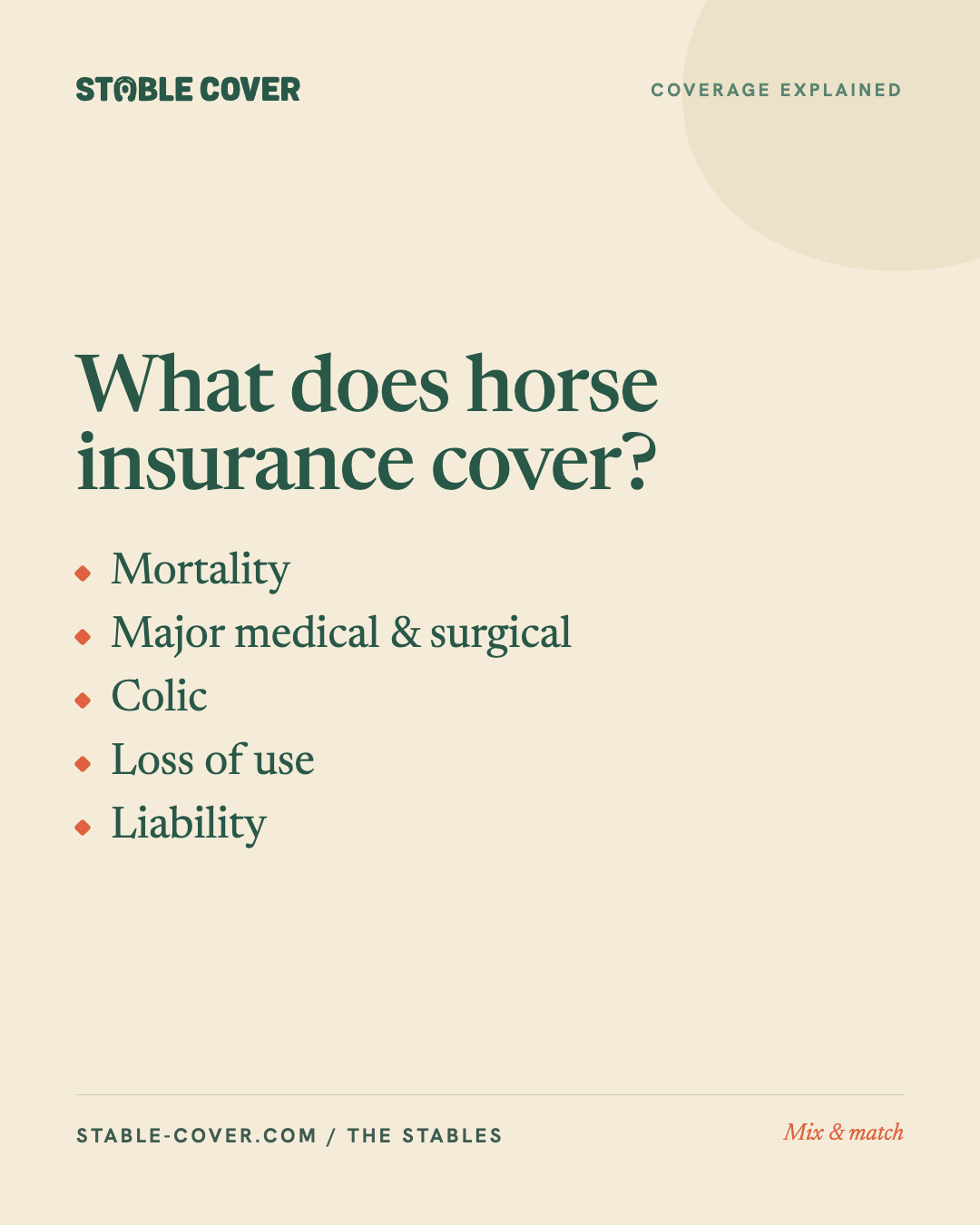
This is the big one — and the part you control. A basic mortality policy is the most affordable starting point. Adding major medical, surgical, colic, or loss-of-use protection increases the premium, but it's also where insurance earns its keep when something goes wrong.
5. Your deductible and co-pay
Higher out-of-pocket costs usually mean a lower premium, and vice versa. It's worth knowing that with Stable Cover, $0 deductible and 0% co-pay options are available on most plans — so a lower premium doesn't have to mean a bigger bill at claim time.
6. Where you live
Vet costs and risks vary by region, so your state and ZIP code play a part too. We're licensed in 30+ states, and your local pricing reflects local realities.
Why a single bad day can cost more than years of premiums
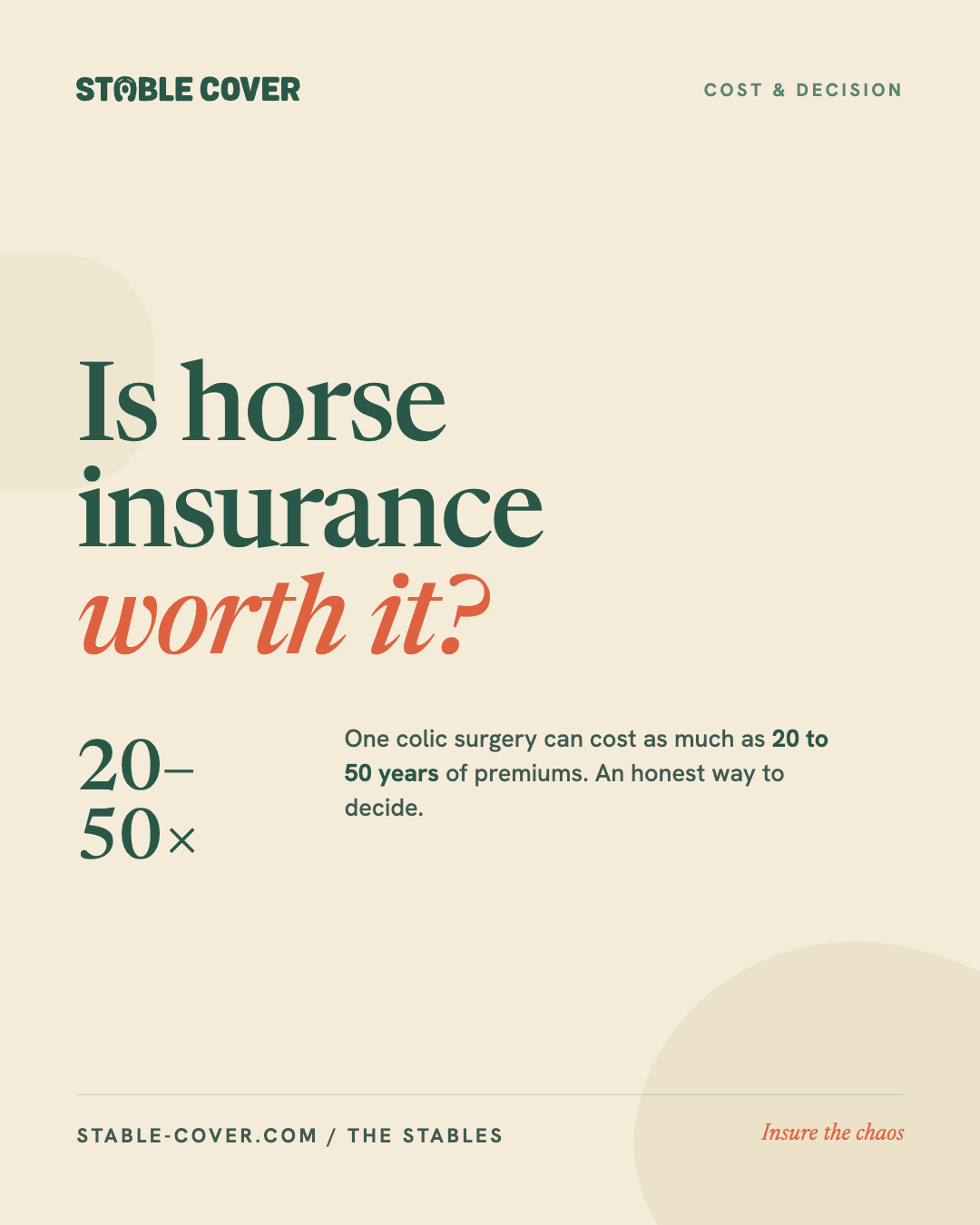
It's easy to look at an annual premium and wonder if it's worth it. Then you remember what one emergency can run. Colic surgery alone commonly costs $7,000 to $15,000, and veterinary prices have been climbing by roughly 10% a year. A few hundred dollars in annual coverage starts to look very different next to a five-figure surgery bill.
That's the real math behind horse insurance: you're trading a small, predictable cost for protection against a large, unpredictable one.
How to keep horse insurance affordable
You don't have to choose between good coverage and a price that works for you. A few simple moves help:
- Insure early. The younger and healthier your horse, the lower your premium — and the fewer pre-existing conditions to worry about later.
- Match coverage to your horse. You don't need every add-on; you need the ones that fit how you ride and what you'd struggle to pay out of pocket.
- Use a plan that doesn't punish you at claim time. Low premiums mean little if the deductible and co-pay eat your reimbursement. Look at the whole picture.
- Get a real quote. Ranges are helpful, but your horse is one of a kind. A quote takes the guesswork out.
See your number in minutes
The fastest way to answer "how much will my horse cost to insure" is to run the numbers on your own horse. Fill out our request a quote form for free and and we'll build coverage around your horse and your budget. Want to talk it through first? Our team are real, friendly horse people — no bots, no pressure.
Frequently Asked Questions
How much does horse insurance cost per month?
Many owners pay the equivalent of a low-to-mid hundreds of dollars per year, which works out to roughly $15–$40 a month for a typical horse — though your exact cost depends on your horse's value, age, use, and the coverage you choose.
Is horse insurance based on the horse's value?
Mortality coverage is, yes — it's usually priced as a percentage (about 2.75%–4%) of your horse's insured value. Medical and surgical coverage is typically a flat annual amount based on the limit you select.
Does horse insurance cover vet bills?
With major medical or surgical coverage added to your policy, yes — eligible vet bills for illness and injury can be reimbursed. A mortality-only policy does not cover routine vet care.
Can I use my own vet?
With Stable Cover, you can use any licensed vet in the U.S. You're never locked into a network.
How fast are claims paid?
Most Stable Cover claims are reimbursed within 48 hours of approval.
Popular Posts

Strangles Awareness Week 2025

Understanding Pre-Existing Conditions

The Ultimate Guide to Equine Physical Therapy


The Stable Categories


Your horse's protection, tailored to complement your lifestyle effortlessly.